
- Santa Ynez, CA
- 5,000 cases annually
- Winemaker Wynne Sargeant plus one assistant winemaker
The Challenge
Spreadsheets Aren’t “Free”
A barrel inventory sheet in one tab. A fermentation log in another. A compliance tracker that’s been handed down and adapted over the years. A blending workbook, a tasting note doc, and a case count sheet. Plus the binders sitting in the desk drawers. None of it connected.
When someone asks what the setup costs, the honest answer is nothing. There is no line on the P&L for wine production software. Technically, it’s free.
Then you count the hours.
When Wynne Sargeant joined Brave & Maiden as winemaker, the production records lived across a whole array of Google Sheets, which is a very common setup for small wineries. Topping a barrel meant opening the inventory sheet to find the right lot, then jumping to roughly a dozen other spreadsheets feeding compliance, logistics, blending, and inventory. Each one updated by hand. Technical sheets for wines already in bottle were incomplete, so producing one meant rebuilding the wine’s history from scratch. The assistant winemaker was burning an hour a week on physical recounts and barrel number detective work. None of that showed up on an invoice. All of it showed up in the hours spent doing unnecessary administrative work each day.
I had to do full investigative work to figure out the history of a single wine. I had to go to the printed fermentation sheet, follow that to the blending sheet to figure out what actually made the final cut, then to cases produced, then to the analyses. All of these different documents for one wine.
-Wynne Sargeant, Winemaker
The real issue was that no single document was the source of truth. The lot history lived in one place, the compliance numbers in another, the blend decisions in a third, and keeping them in sync was a full-time job. On a two-person production team, that job falls to the winemaker. It’s a pattern that plays out at small wineries everywhere, and Brave & Maiden was no exception.
Spreadsheets were the cheapest tool in the cellar on paper, and the most expensive one in practice. Most wineries just haven’t run the math yet. Brave & Maiden did.
The Solution
Trading a Dozen Spreadsheets for One Source of Truth
Wynne had used InnoVint during her seven years at Peak Ranch, where she implemented the platform as the team built out a new winery. When she looked at options for Brave & Maiden, the fit for a small production team was obvious.
What made InnoVint the right call for a small winery:
- Flexibility without unnecessary bells and whistles. At roughly 5,000 cases with two people making the wine, she did not need the most complex platform on the market. She needed something flexible enough to meet the winery where it was, without paying for features she couldn’t use.
- Built for the cellar, not the desk. The assistant winemaker can record a top, a loss, or an addition from where the work is actually happening, so the data gets entered once, by the person doing the work. No retyping or reconciliation.
- Live data from anywhere. Instead of walking the barrel rows to verify what the spreadsheet claims, Wynne can see real-time inventory from wherever she is.
- One system the whole team works from. The entire team contributes to the same live record, so the winemaker is no longer the bottleneck or the only person holding the data.
You don’t necessarily need all the bells and whistles when you’re a small winery, and you can’t necessarily afford the fanciest platform. What we needed was a system that does exactly what the winery needs, nothing more, with room to build on. That system was InnoVint.
-Wynne Sargeant, Winemaker
What Changed When Spreadsheets Went Away
By the numbers
- Tech sheet prep: 8 hours per wine down to about 1 minute
- Inventory and compliance work: 30 minutes per task down to 5
- Weekly physical recounts: 1+ hour saved per week
- Annual savings: ~$7,500
- Payback period: ROI inside year one
- EOY inventory discrepancies: eliminated
Measurable ROI inside year one
The clearest wins are the ones Wynne could measure. Tech sheets that used to take 8 hours to reconstruct from scattered spreadsheets now pull in under a minute. Her own inventory and compliance routine dropped from 30 minutes to 5. Her assistant winemaker was spending about an hour a week on extra physical counts and chasing down unclear barrel numbers, work that is now almost entirely gone. Wynne quantified the combined savings at roughly $7,500 a year and realized a return on investment within year one.
Given the reasonable pricing, we have already realized a return on investment within our first year. We have saved a significant amount of time and successfully eliminated inventory discrepancies.
-Wynne Sargeant, Winemaker
What a single source of truth unlocks
The hours and dollars are only part of the story. The operational change is that Brave & Maiden now has the single source of truth it never had in the spreadsheet era, and that changes how the entire winery runs.
End-of-year inventory accuracy is, in Wynne’s words, night and day. Physical counts on December 31st used to surface barrels and kegs that the spreadsheets had lost track of, which matters beyond compliance. As Wynne explained, “If you don’t realize you have a barrel until you do your one physical count, you’re not in a great spot. You wonder, was that barrel ever topped? Was it given the necessary additions? Maybe that barrel now doesn’t have hope to be in your single varietal bottling.” Now the numbers match reality, and questions that used to be guesswork are a filter away.
For a team this size, the bigger point is that InnoVint distributes the tracking load instead of concentrating it in one person’s head. The conventional wisdom says you don’t need software because everyone already knows what’s going on. Wynne has found the opposite. When the tracking lives in spreadsheets or a single winemaker’s notebook, one person becomes the bottleneck and the single point of failure. With a shared source of truth, her assistant winemaker enters tops, losses, and additions from the cellar floor, and that single entry updates compliance, inventory, and blending history together.
“Having such a small team, it helped share the burden of tracking. It helps make everything more streamlined, and it builds your team’s ability to understand the importance of tracking and maintaining your winery data.”
-Wynne Sargeant, Winemaker
And for Wynne, the value of a shared system extends beyond the current team.
“This is the kind of system that outlives the winemaker. Whether it’s a family winery passing the business to the next generation or a team bringing someone new into the cellar, you’re investing in generations of information.”
-Wynne Sargeant, Winemaker
The Takeaway for Small Wineries
Spreadsheets aren’t actually free. They cost hours, accuracy, and the reconciliation work that pulls a winemaker out of the cellar.
A small, lean team is exactly the reason to invest in a real system of record. It’s the team that can least afford for the data to live in one person’s head.
Notebooks get lost. People leave. Putting your winemaking history into a real system of record is how you protect the future of the winery.
-Wynne Sargeant, Winemaker
Where do you want the knowledge of how your wines were made to live? In one person’s notebook, a folder of disconnected spreadsheets, or in a system the whole team can contribute to and the next winemaker can inherit?
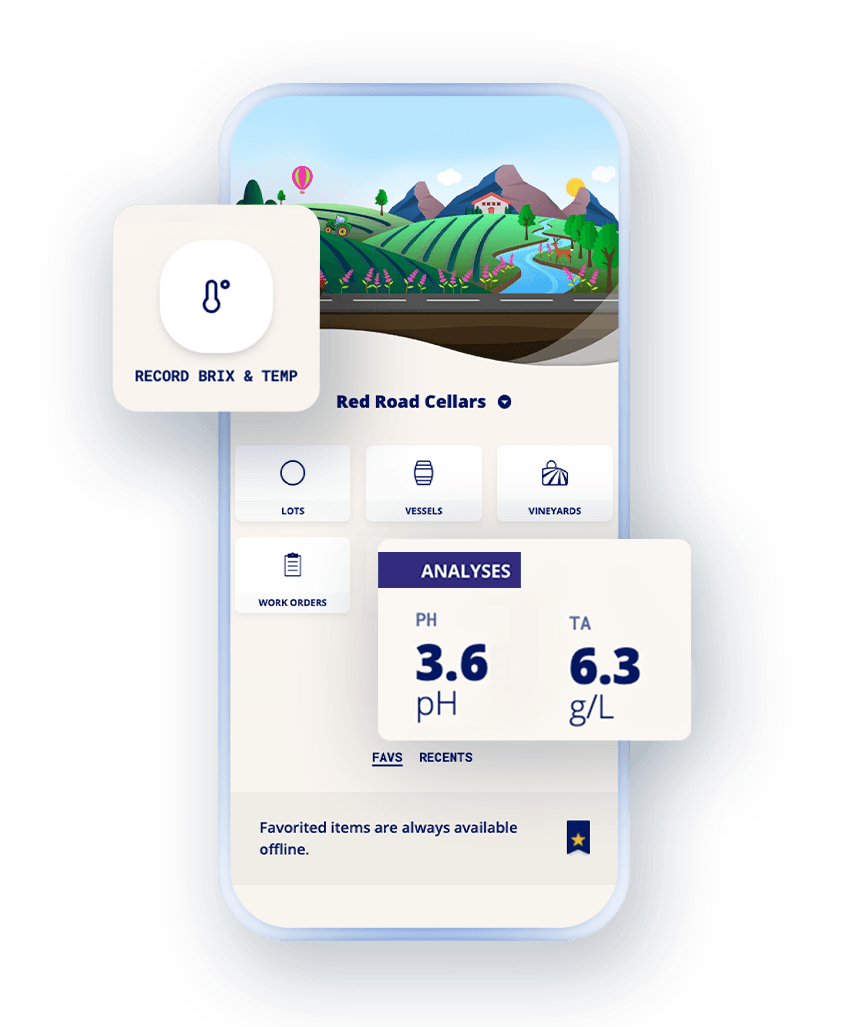
Save Time, Save Money
Level up your productivity with a single source of truth for everything happening at your winery.
Take InnoVint with you everywhere and anywhere to gut-check your decision-making. Vineyard, cellar, lab, on vacation… it’s there for you.